Cassiel, Archangel of Saturn
Dec 26, 2022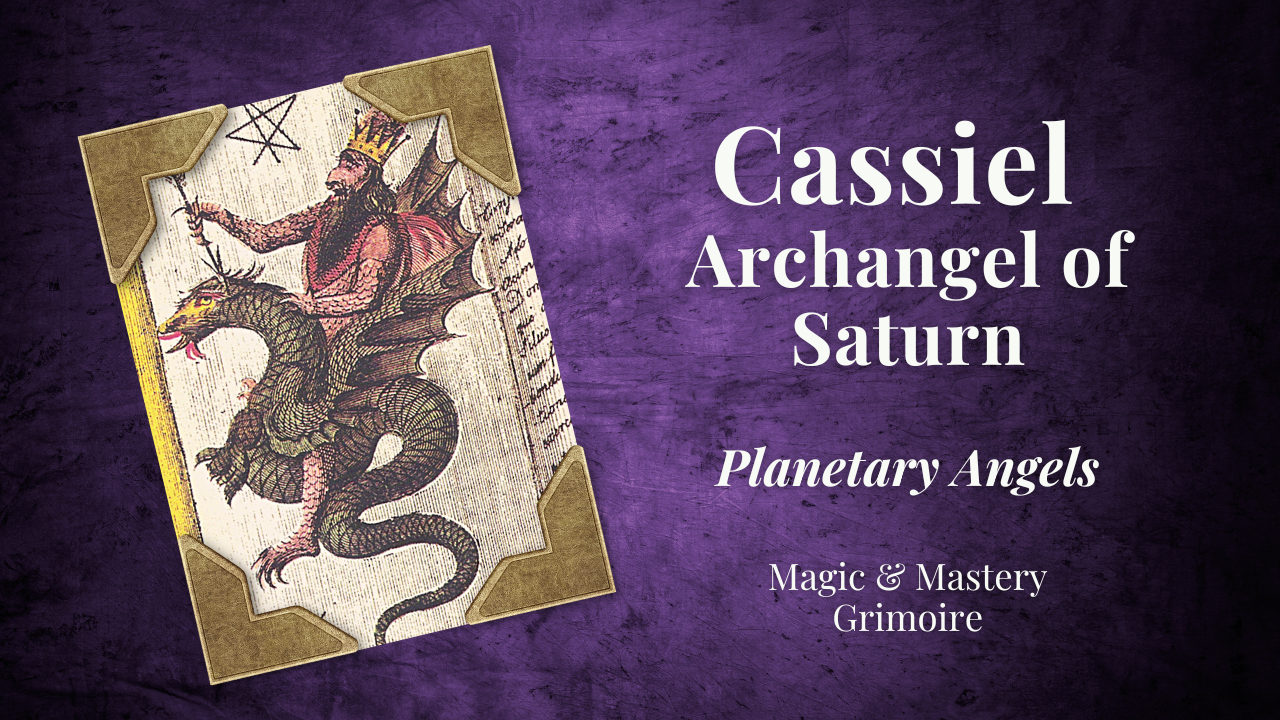
Most angels are portrayed as active — delivering messages, comforting the grieving, fighting battles. Cassiel does none of these things. He watches.
Unlike other angels, Cassiel is depicted as detached from worldly affairs, more inclined to watch events unfold without interference. Medieval angelologists named Cassiel the Archangel of Saturn.
These angel-scribes knew Cassiel by many names — including Kaziel, Cafziel, Quaphziel, Qaspiel. The Qabalistic text Sefer Raziel, pseudo-Peter d'Abano's 13th-century Heptameron, and the scholar Averroës all list Cassiel as Saturn's angel, as do numerous later magical texts following in their tradition.
But the assignments of Saturn's angel are by no means universal. Perhaps that's to be expected from the Archangel of Saturn. Saturn is the faintest of the visible planets; to the ancient astrologers, he separates the world of Nature from the mysterious world of Spirit. Saturn finds his joy in the 12th house — the so-called "house of hidden things." Cassiel has been called the "angel of solitude and tears," appropriate for one who sets himself apart from others.
The classical virtue associated with Saturn is sophrosyne — a complex concept evoking temperance, moderation, prudence, and self-control. In mythology, Saturn ruled over a golden age where all were possessed of such self-discipline that there was no need for laws or punishment. Calling Cassiel the "angel of temperance" essentially names him the Archangel of Saturn.
Saturn is also wrapped up with the concept of time. As the slowest-moving planet, Saturn has been associated with maturity and the aging process. The Greeks' name for Saturn was Kronos, father of Zeus (Jupiter). Their god of time, Chronos, had a pronunciation so similar to Kronos that the two were already being conflated by the Roman era. And hence, Cassiel became known as the "angel of time." There's also a deep esoteric tradition associating time with the veil between worlds; it's when we were entangled in Time that Nature fell from Grace.
It's also been said that Cassiel presides over the deaths of kings — which makes sense when you remember that the Sun represents kingship in astrology. The Sun's sign Leo governs the height of summer, when the northern hemisphere has the greatest light and heat. The Saturn-ruled signs Capricorn and Aquarius rule the darkest months of winter. The Winter Solstice marks the "death" of the Sun, the death of kings. But where there is death, there is always rebirth — which is why celebrations of the Sun's return are held just after midwinter, including the Christian celebration of Christmas.
On the Tree of Life, Cassiel is associated with the sephiroth Binah — Understanding. Binah is the Supernal Mother, the great container that gives Chokmah's outpouring force its first address in creation. Its color is the deep, dazzling darkness that contains all colors. Its spiritual experience is the vision of sorrow — not despair, but the bittersweet recognition that all things end, that every birth contains its death, that the structure of existence requires impermanence. The virtues of Binah are silence, self-restraint, and temperance — the discipline of the great container. These are Cassiel's virtues too. He does not act. He holds.
When you need to step back from life's emotional roller-coaster, or when you need self-discipline and focus to accomplish great things, invite Cassiel to come to your aid. The most auspicious time to connect with Cassiel is Saturday — Saturn's day — or in the Saturn hour.
Looking for another Archangel? Return to Introducing the Planetary Archangels.