Zadkiel, Archangel of Jupiter
Dec 12, 2022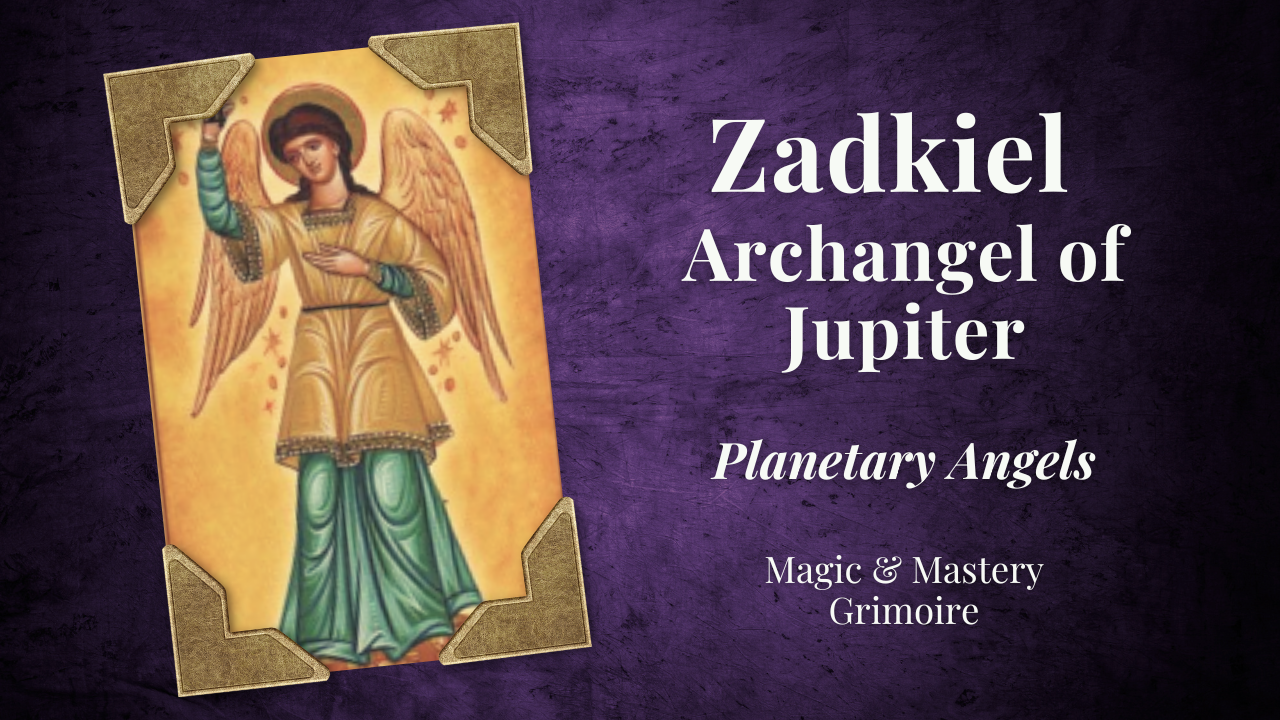
Most people have never heard of Zadkiel. That's worth examining — because his name alone contains one of the clearest pieces of evidence that the planetary angels and the planets were always the same thing.
Zadkiel, the Archangel of Jupiter, doesn't adorn the walls of art museums or stained-glass windows the way Michael or Gabriel do. But among all the planetary angels, his name carries the most suggestive proof of a tradition linking angels and planets directly.
In Hebrew, the name for the planet Jupiter is Zedek, which translates as "righteousness" — the sense of being justified by God, of having integrity, of being in alignment with the cosmic pattern. One who is righteous can see clearly and act with justice and mercy, reveal truth, and prophesy. These are among the oldest associations with the astrological Jupiter.
Angel names typically end with the suffix –el, meaning "of God." Append –el to Zedek and you get Zedek-iel — the angel of Jupiter. And so the name of the order of Melchizedek translates as "my king is righteousness" or simply "my king is Jupiter."
Zadkiel appears in some of the earliest references to angels. The 5th-century Celestial Hierarchy of Pseudo-Dionysius includes him among the seven archangels, as does Pope Gregory's list from the 6th century. In the 12th century, Averroës named Zadkiel the archangel of Jupiter, a tradition adopted throughout Medieval and Renaissance magic and angelology.
In some Talmudic texts, Zadkiel is the unnamed angel of mercy who stays Abraham's hand, preventing him from sacrificing his son Isaac. It is the defining act of his mythology — the intervention that stops force from becoming cruelty, that redirects severity toward compassion. Because of this, Zadkiel is sometimes shown holding a dagger.
On the Tree of Life, Zadkiel is associated with the sephiroth Chesed — Mercy, or Loving Kindness. Chesed is where the divine impulse first takes shape as something a practitioner can actually work with: the pure unconditional creative force that wants to give, to build, to sustain. It is sometimes called the Hall of the Masters — the sphere of those who have done enough inner work to hold the full weight of unconditional compassion without collapsing under it. The vices of Chesed are telling: gluttony, self-righteousness, tyranny — all the ways we stop the flow of love before it reaches what it needs to reach. Zadkiel's gift is keeping that flow moving.
This is why Zadkiel brings abundance and prosperity specifically when we are acting with justice, fairness, and generosity. He teaches that when we are in right relationship with the cosmic order, our needs will be met. When we have a need or a lack, he aids our efforts — and brings forgiveness when we've fallen short, so we can start again.
As the Archangel of Jupiter, the most auspicious time to call on Zadkiel is Thursday, Jupiter's day, or in the Jupiter hour.
Looking for another Archangel? Return to Introducing the Planetary Archangels.