What are the Four Worlds of Qabala?
Apr 10, 2026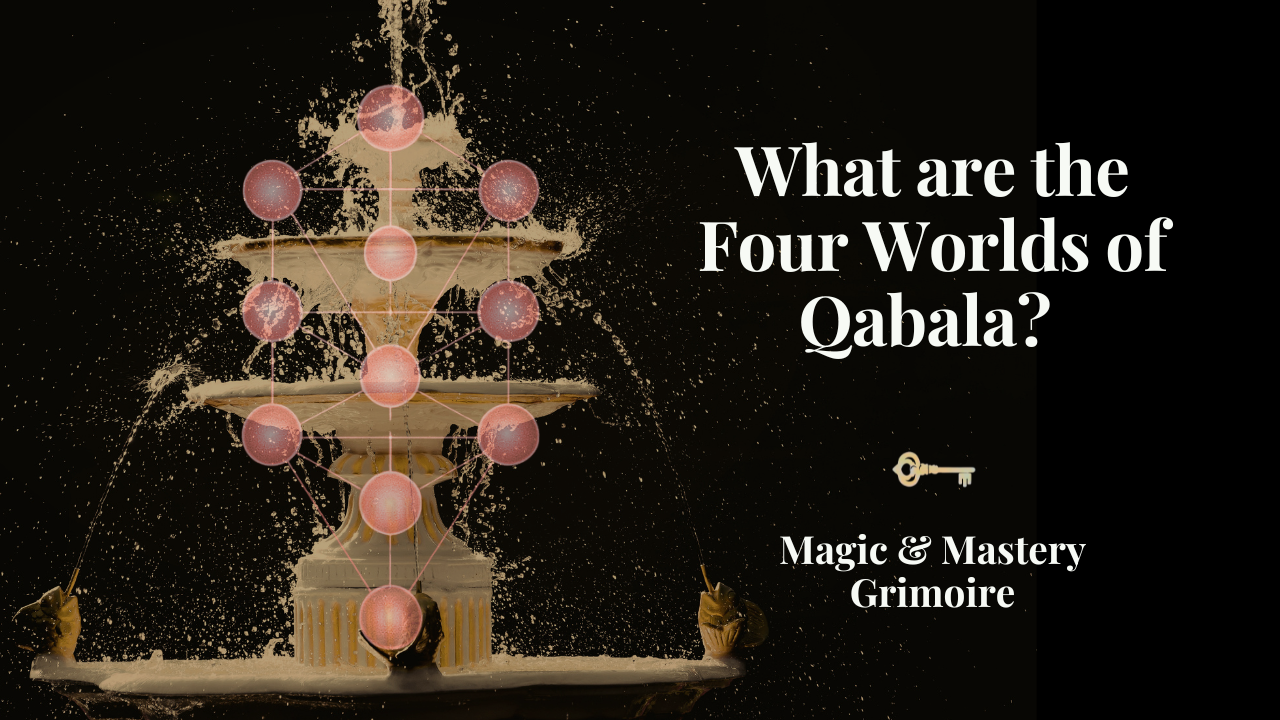
The Tree of Life is more than a map of ten Sephiroth. It's a map of how reality organizes itself across multiple levels — from the most abstract divine source down to the physical world where things actually happen.
Those levels have names. The tradition calls them the Four Worlds: Atziluth, Briah, Yetzirah, and Assiah.
The Four Worlds describe the same process at two scales simultaneously. At the macrocosmic level, they map how creation flows — how the divine source produces the physical world, how the One becomes the Many. At the microcosmic level, they map how your experience forms — how desire becomes thought becomes image becomes result. This is what the Hermetic tradition means by as above, so below. The same four-stage cascade operates at the cosmic scale and at the personal scale, following the same logic every time anything comes into being.
Understanding the Four Worlds is what turns the Tree from an interesting diagram into a working model of how creation actually occurs. The practice is learning to move through them consciously — from the first fire of genuine intention all the way down to the physical world where everything must eventually land.
Atziluth, The Archetypal World
Element: fire. The top of the Tree — Kether, Chokmah, Binah.
Atziluth is reality before it has taken any specific form. Not even an idea yet. Pure divine impulse, pure potential, the undifferentiated source from which everything eventually flows. At the cosmic scale, this is the first moment of creation — the One before it has become the Many. At the human scale, it's the level of pure will: not the intention you can put into words, but the deep underlying drive that precedes language entirely.
Let’s be honest, most practitioners never work consciously at this level. Atziluth isn't inaccessible in the sense of being forbidden — it's inaccessible in the sense that working there deliberately requires a degree of development that most of us are still moving toward. What Atziluth gives you, practically, is orientation: understanding that the impulse underneath your stated intention matters, and that working with no genuine fire at its root will struggle to manifest no matter how well-constructed everything else is.
Briah, The Creative World
Element: water. The upper middle section: Chesed, Geburah, Tiferet.
Briah is where the fire of Atziluth takes its first shape. Not physical shape — not yet — but archetypal form. The level of the divine creative mind, of the organizing pattern that will eventually become something concrete. If Atziluth is the spark, Briah is where the spark takes on its intention with a direction.
The Sephiroth of the world of Briah — Chesed (love and expansion), Geburah (discipline and will), Tiphareth (the Higher Self, the point of balance at the center of everything) — give a working its fundamental character. Is this coming from a genuine purpose or from fear? From love or from grasping? Briah is where you find out.
Tiphareth is the most practically significant Sephirah in Briah for most practitioners. It's the Higher Self — the divine spark within each person, the level of consciousness that serious Hermetic work is oriented toward reaching. Not the highest level on the Tree, but the highest level at which an individual sense of self still exists. Working consciously from Tiphareth rather than from the personality is one of the central aims of the tradition.
Yetzirah, The Formative World
Element: air. The lower middle section: Netzach, Hod, Yesod.
Yetzirah is the astral realm: the world of formation, where patterns crystallize into images, feelings, and mental structures. This is where the blueprint gets drafted. The level of the imagination in its deepest sense: not daydreaming, but the generative field in which experience takes shape before it arrives in physical form.
The three Sephiroth of Yetzirah map directly onto the components of that assembly process. Netzach is the emotional and instinctive charge, the feeling underneath everything. Hod is the interpretive mind, the story, the language, the framework. Yesod, at the base of the triangle, is where Netzach and Hod converge into your felt sense of what's real: the reality bubble, the astral body, the dream-space.
This is the World where most magical practice actually lives. Visualization, pathworking, ritual that works through image and symbol — all of it operates primarily in Yetzirah. It's also where most stuck patterns live: in the emotional charge that doesn't shift no matter how many times you reframe the story, or in the underlying sense of reality that quietly reconstitutes itself in the old shape no matter what you do at the physical level.
Assiah, The Material World
Element: earth. The base of the Tree — Malkuth alone.
Assiah is where everything lands. The realm of action, of effects, of physical reality. Where you live. Where the entire process from Atziluth through Briah through Yetzirah must eventually arrive.
Malkuth is Assiah's only Sephirah. Everything above it in the Tree is invisible from here, but it's all present, all active, all contributing to what manifests. A working that never arrives in Assiah hasn't completed the circuit. The light doesn't turn on if the current doesn't reach the filament.
This is why the Hermetic tradition insists on material anchors for magical work — the candle, the talisman, the written petition, the changed behavior. Something in Assiah that says: this is where this working lands.
The Same Process at Every Scale
What the Four Worlds reveal, when you sit with them long enough, is that creation isn't a single event. It's a continuous process — happening at the cosmic level and at the personal level simultaneously, following the same four-stage cascade every time anything comes into being.
Understanding that cascade doesn't immediately make you a master of all four levels. The upper Worlds — particularly Atziluth — are territories that require significant development to work in deliberately. But understanding the full map, even the parts you're not yet working in, changes how you see the parts you are. It tells you where your practice is strong, where it's thin, and what the tradition is asking you to develop next.