What Is Pathworking?
Apr 10, 2026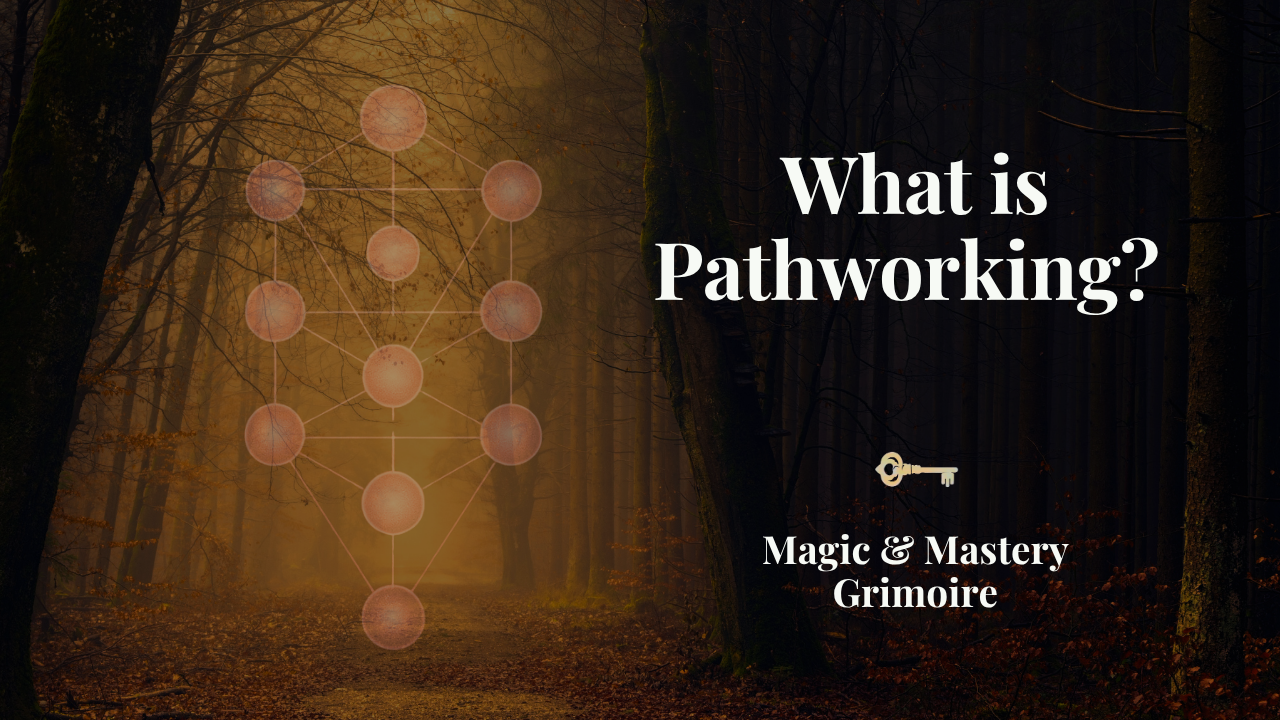
You can know everything about a city without having been there. You can read the guidebooks, study the maps, memorize the neighborhoods. But you don't know what the market smells like at six in the morning, or which street feels dangerous at midnight, or where you'd actually want to live.
The Tree of Life has the same problem. You can learn the Sephiroth, understand the Three Pillars and the Four Worlds, trace the Lightning Path from Kether to Malkuth and back — and still be standing outside looking at a map. Pathworking is what takes you inside.
The Difference Between Sephiroth and Paths
The ten Sephiroth are objective states. They're the emanated qualities of reality — the distinct modes of being that exist whether or not you're paying attention to them. Everyone who works with Chesed is touches the same quality of expansive, unconditional love. Everyone who works with Geburah is encounters discipline and contraction. The Sephiroth are out there, consistent, observable.
The twenty-two paths are different. They're subjective — they describe what you experience in the process of moving between two Sephiroth, two states of consciousness. And that experience is not the same for everyone, and not the same twice. It emerges. It can't be forced or analyzed into existence. It has to be entered.
Pathworking is the deliberate practice of entering those paths — of using active imagination to travel from one state of consciousness to another and experience what that transition actually feels like from the inside.
Active Imagination
The primary tool of pathworking is active imagination — an open, contemplative state that sits between ordinary waking consciousness and sleep. Not visualization in the sense of constructing a mental picture and holding it there by force. More like setting conditions for something to arise and then being genuinely present to what comes.
The Hermetic tradition has worked with this state for centuries. Carl Jung rediscovered it independently and built a significant portion of analytical psychology around it. The practice shows up in ceremonial magic, in shamanic journeywork and in certain forms of Ignatian prayer. The method varies. The underlying state is consistent: you're below the analytical mind but above the dream-state. Receptive but not passive. Present but not controlling.
Western minds trained to prefer action and results often find this the hardest part of pathworking. You can't make it happen by trying harder. You have to invert your usual approach — set the conditions, enter the state, and wait without expectation. The path reveals itself when you stop insisting on controlling what it shows you.
What You're Actually Climbing
The twenty-two paths are traditionally worked in a specific order, from the bottom of the Tree upward — from Malkuth toward Kether, from the ordinary personality toward the divine source. And they fall naturally into three levels.
The paths of the personality run through the lower Tree — the territory of Malkuth, Yesod, Hod and Netzach. These paths map the ego structure: the imagination, the analytical mind, desire and passion, the reality bubble that assembles itself from all of those inputs. This territory is immediately recognizable because you live in it every day. You know what your inner chatter sounds like. You know what your emotional body feels like when it's activated. These paths ask you to observe all of that with unusual precision — not from inside it, but as a practitioner looking at it clearly.
The paths of the Higher Self cross the veil called the Parochet and move toward Tiphareth, the Sephirah of the Higher Self. This is where the work gets harder to put into words. Below the Parochet, everything is familiar. Above it, experience becomes more abstract, more symbolic, less easily analyzed. These paths are best understood as analogies and felt encounters rather than concepts you can master intellectually. If you look too hard at what you find there, it shifts. The Tower card sits at the threshold here — the last path below the veil, representing the ego finally willing to relinquish its grip on its own limited version of reality.
The paths of the Divine Self move through the upper Tree, toward the Supernal Triangle. This is territory the tradition approaches with considerable humility. The experiences available here — the dissolution of individual selfhood, the encounter with something genuinely beyond ordinary consciousness — are real, but they're not something you work toward directly in the early stages of practice. You build toward them.
How You Actually Do It
In practice, pathworking typically begins with grounding — getting out of your head and into your body, into Malkuth, before you start climbing. Then, entering the contemplative state and working with whatever symbol, image or prompt corresponds to the path you're exploring.
For Hermetic practitioners, the 22 Major Arcana cards are the most common tool — each card encodes the qualities of one path, which is why they were designed the way they were. A pathworking session with the Tower card isn't a Tarot reading. You're not asking what the card means for your life. You're using the image as a doorway into a specific interior landscape, and allowing whatever that landscape holds to emerge.
You'll probably journal afterward. The material that surfaces in pathworking tends to be personal, specific, and often surprising. That's the point — you're not learning about a state of consciousness, you're learning to recognize it when you're in it, and to work with what you find there.
Why It Matters
Here's what pathworking produces that no amount of reading about the Tree produces: you stop navigating by feel and start navigating by recognition.
The difference between a practitioner who has done pathworking and one who hasn't isn't that one knows more. It's that one has been there. When the Tower shows up in a reading, or when a Saturn transit has you in its grip, or when a magical working keeps dissolving in the same place, the practitioner who has worked those paths knows what they're standing in. Not from a book. From experience.
The map is indispensable. But at some point, you have to put it down and walk.