Planetary Hours: Magical Timing Made Easy
Jul 09, 2026
Planetary Hours are exactly what they sound like: a symbolic system in which every day and hour is associated with one of the seven visible planets.
The system has been around for a few thousand years as a simple way to know when to “approach” the planetary spirits. Basically, the community would commune with Sun gods on Sundays, Moon gods on Mondays, and so on.
If you’re interested in establishing a relationship with the planets, it’s a useful tool to add to your practice.
Why Use Planetary Hours?
To ancient stargazers, planets were more than moving lights in the heavens; they served as messengers of the Divine, the living archetypes through which the world itself was “spoken” into being.
So it's no surprise we wanted to understand what they had to say. So we learned to map the sky and predict where and when each planet would be visible — these maps are now known as astrology charts.
However, casting an astrological chart by hand is no simple thing. It required expensive books, astronomical instruments, and formal training in math and astronomy. So, for most of history, “astrology” was only available to the wealthy and well-educated.
Most magicians, witches and shamans — even ordinary people — had to make do with something simpler for their planetary magic. The most popular alternative? The Planetary Hours.
Understanding the Cosmic Order
The concept of Planetary Hours has been around for at least 2,000 years. It draws on the ideas of one of the oldest models of the cosmos.
In the 4th century BCE, the Greek philosopher Plato described the worldview in his Myth of Er. He portrayed a cosmos composed of concentric circles, described as the spinning wheel of fate. In this “celestial spheres” model, the Divine occupy the outer rim, while our ordinary 3D world sits at the center. The planets weave the “soul” that connects the two.
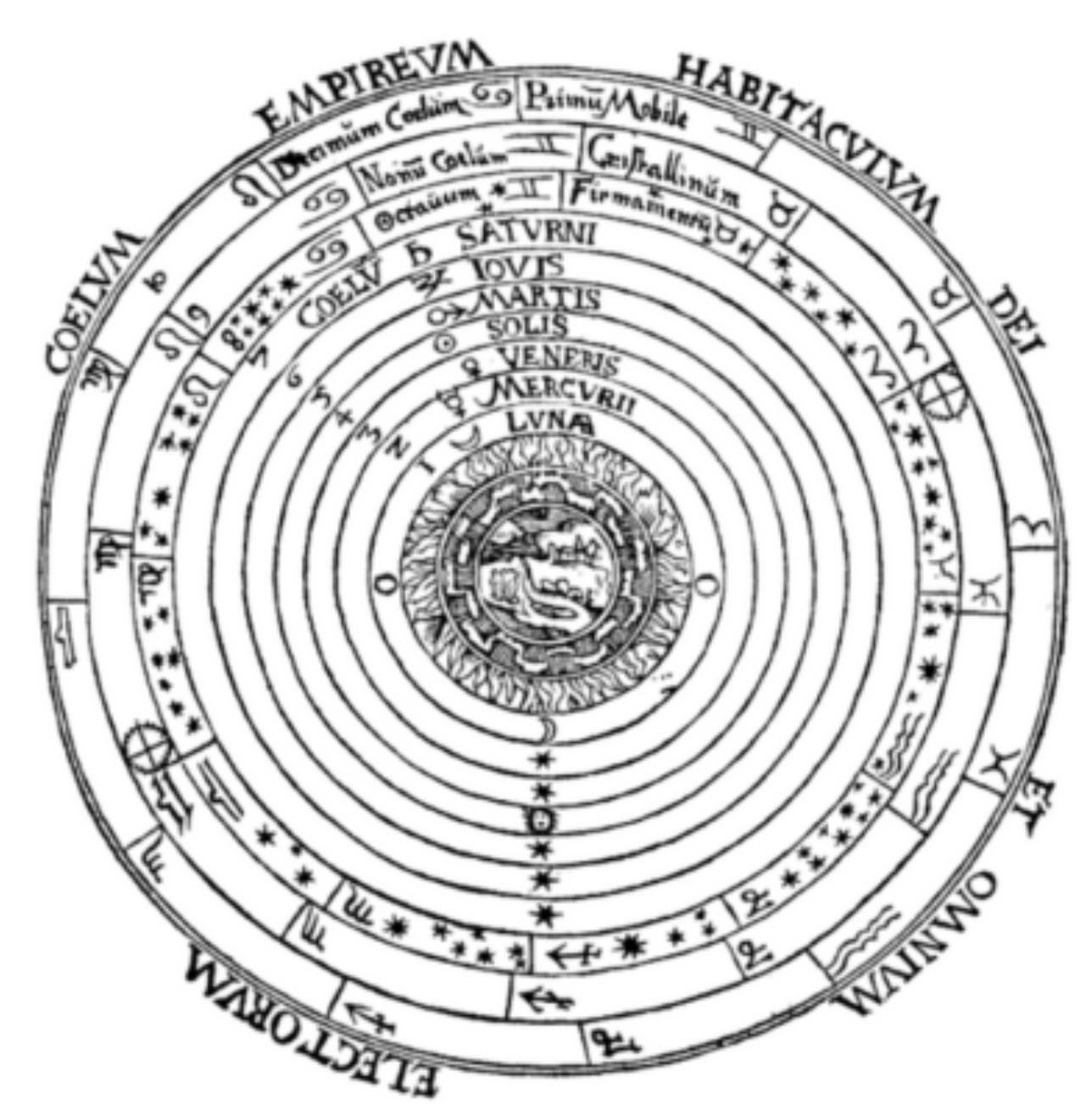
It might be easier to think of this as a picture of looking down into a well.
The Divine realm is outside the well, or “Above.” You look down into the well to see the Earth nestled within or “Below.” The visible Planets are like concentric rings or steps along the “walls,” arranged with the slowest-moving planet (Saturn) near the top, down to the fastest-moving planet (the Moon) at the bottom near Earth.
The resulting sequence -- Saturn, Jupiter, Mars, Sun, Venus, Mercury, Moon -- became known as the Chaldean Order.
How Planetary Hours Work
How does this relate to the Planetary Hours? I’m glad you asked. It’s this Chaldean Order that’s used to assign planets to days and hours.
Here’s how it works. Days are divided into 12 equal daylight “hours” and 12 equal nighttime “hours.”
(Fun fact: the idea of an hour as exactly 60 minutes came with the invention of mechanical clocks. An hour used to mean just a division of time. Thanks to the Earth's tilt, days and nights are rarely exactly 12 clock hours long. For example, summer days run longer than summer nights. That means a "planetary hour" can run more or less than 60 minutes of clock time, depending on the season.)
The “hours” count begins with the Sun at dawn on Sunday, traditionally the first day of the week. A planet is assigned to each successive “hour” of the day according to the Chaldean order. Here's how the hours break down across a full week:
Sunrise Hours (dawn to dusk)
|
Hour |
Sun |
Mon |
Tue |
Wed |
Thu |
Fri |
Sat |
|---|---|---|---|---|---|---|---|
|
1 |
Sun |
Moon |
Mars |
Mercury |
Jupiter |
Venus |
Saturn |
|
2 |
Venus |
Saturn |
Sun |
Moon |
Mars |
Mercury |
Jupiter |
|
3 |
Mercury |
Jupiter |
Venus |
Saturn |
Sun |
Moon |
Mars |
|
4 |
Moon |
Mars |
Mercury |
Jupiter |
Venus |
Saturn |
Sun |
|
5 |
Saturn |
Sun |
Moon |
Mars |
Mercury |
Jupiter |
Venus |
|
6 |
Jupiter |
Venus |
Saturn |
Sun |
Moon |
Mars |
Mercury |
|
7 |
Mars |
Mercury |
Jupiter |
Venus |
Saturn |
Sun |
Moon |
|
8 |
Sun |
Moon |
Mars |
Mercury |
Jupiter |
Venus |
Saturn |
|
9 |
Venus |
Saturn |
Sun |
Moon |
Mars |
Mercury |
Jupiter |
|
10 |
Mercury |
Jupiter |
Venus |
Saturn |
Sun |
Moon |
Mars |
|
11 |
Moon |
Mars |
Mercury |
Jupiter |
Venus |
Saturn |
Sun |
|
12 |
Saturn |
Sun |
Moon |
Mars |
Mercury |
Jupiter |
Venus |
Sunset Hours (dusk to dawn)
|
Hour |
Sun |
Mon |
Tue |
Wed |
Thu |
Fri |
Sat |
|
1 |
Jupiter |
Venus |
Saturn |
Sun |
Moon |
Mars |
Mercury |
|
2 |
Mars |
Mercury |
Jupiter |
Venus |
Saturn |
Sun |
Moon |
|
3 |
Sun |
Moon |
Mars |
Mercury |
Jupiter |
Venus |
Saturn |
|
4 |
Venus |
Saturn |
Sun |
Moon |
Mars |
Mercury |
Jupiter |
|
5 |
Mercury |
Jupiter |
Venus |
Saturn |
Sun |
Moon |
Mars |
|
6 |
Moon |
Mars |
Mercury |
Jupiter |
Venus |
Saturn |
Sun |
|
7 |
Saturn |
Sun |
Moon |
Mars |
Mercury |
Jupiter |
Venus |
|
8 |
Jupiter |
Venus |
Saturn |
Sun |
Moon |
Mars |
Mercury |
|
9 |
Mars |
Mercury |
Jupiter |
Venus |
Saturn |
Sun |
Moon |
|
10 |
Sun |
Moon |
Mars |
Mercury |
Jupiter |
Venus |
Saturn |
|
11 |
Venus |
Saturn |
Sun |
Moon |
Mars |
Mercury |
Jupiter |
|
12 |
Mercury |
Jupiter |
Venus |
Saturn |
Sun |
Moon |
Mars |
If you study the chart, you’ll notice another fun fact: the days of the week were named for the planetary hour of sunrise on that day. So:
- Sunday = Sun's Day
- Monday = Moon's Day
- Tuesday = Mars' Day
- Wednesday = Mercury's Day
- Thursday = Jupiter's Day
- Friday = Venus' Day
- Saturday = Saturn's Day
Three planet day-names are still preserved in English: Sunday, “Moon”day (Monday) and Saturday (Saturn). Other languages — Spanish, French, among them — kept the planet names for the rest of the week, too.
Calculating Planetary Hours
Now, if you want to start using the planetary hours for yourself, the math isn’t hard if you know the length of your local day and night.
Or, since we do live in the digital age, you can just use an app.
Planetaro, Chronos XP, or Time Nomad are all solid places to start. Or search "planetary hours" in your app store — new ones show up regularly.
Auspicious Activities by Planetary Hour
Now that you know what Planetary Hours are and how they work, we can get to the fun stuff.
By working in harmony with the Planets, you can help manifest the creative powers of the Divine here on Earth.
The ideal activities for the planetary day or hour are those favored by the planet ruling the hour. When performing a ritual or casting a spell that called upon the power of a particular planet, the magician would choose the day and/or hour of the planet involved to encourage magical success.
However, even if you don’t have a formal planetary magic practice, you can use the same techniques to plan your own days. For example, schedule your Venus-loved activities for a Friday, or your Jupiter luck-increasing pursuits on a Thursday.
Here are some of the traditional activities preferred by each planet. And some specific actions might involve two planets; I marked them below using “with X planet.” (For example: Overcoming obstacles = Saturn + Jupiter; that means a Jupiter hour on Saturn’s day or a Saturn hour on Jupiter’s Day.)
Feel free to use logic and your imagination to brainstorm other associations that fit the pattern.
Activities for Saturn Hours
- Discipline, patience & endurance
- Projects of long duration (breaking ground, laying foundations)
- Making repairs
- Seeking favors from older people, especially older men (not relatives), or difficult people With the Moon: Giving up bad habits
- With Jupiter: Overcoming obstacles
- With the Sun: Treating chronic illness
Activities for Jupiter Hours
- Wisdom & spiritual connection
- Expressing gratitude, enthusiasm & optimism
- Working with money (borrowing, lending, investing, earning, winning)
- Increasing Luck (Buying lottery tickets, playing games)
- With the Sun: Seeking advice. Settling disputes.
Activities for Mars Hours
- Courage & strength
- Success with drastic action (lawsuits, conflicts, going to war)
- Engaging in exercise & athletic competitions
- Separations (divorce, firing employees, ending contracts)
- Seeking favors from men, especially husbands or boyfriends
- With the Sun: Enforcing your will
Activities for Sun Hours
- Success & recognition
- Health, energy & vitality
- Making big decisions, or scheduling meetings for reaching decisions
- Seeking favors from leaders, bosses & other authorities
- With the Moon: Giving speeches or launching new projects that require visibility
- With Mars: Activities requiring courage or a mood of self-certainty
- With Jupiter: Seeking spiritual illumination
Activities for Venus Hours
- Love, romance, dating & weddings
- Social success, social gatherings & friendship
- Artistic, aesthetic activities such as recitals or exhibitions
- Buying gifts, clothing & luxuries
- Beauty treatments, haircuts & personal grooming
- Seeking favors from women, especially wives or girlfriends
Activities for Mercury Hours
- Clear communication (including important business meetings, phone calls, emails, letters)
- Teaching, writing, studying & learning
- Buying and selling, routine shopping, errands
- Job applications & interviews
- Seeking favors from children, neighbors or co-workers
Activities for Moon Hours
- Sleep & dreaming
- Nurturing, including self-care
- Home, including buying a home or moving.
- Seeking favors from women, especially mothers and wives, employees, or the public
- With Mercury: Travel (especially the time of leaving home, or an airplane’s takeoff)